Clogged drains have a way of showing up at the worst possible time. Most homeowners call a local plumber, the line gets cabled, water drains again, and everyone moves on. Then the same line closes up six weeks later. The pattern repeats until someone asks the right question: what is actually going on inside the pipe? That is the problem a camera inspection is built to solve.
As a plumbing company that has cleaned and repaired thousands of drains in older bungalows, new townhomes, restaurants, and everything in between, I have a clear bias toward information. A mechanical cleaning tool can open a path, but a camera shows you the condition that created the blockage in the first place. The difference between clearing a clog and solving a drain problem is detail, and a good video inspection provides it.
What a modern drain camera actually shows
A standard residential inspection camera is a flexible push rod, usually 100 to 200 feet long, with a small self-leveling head and a bright LED. The camera head is roughly the size of a thumb to a golf ball depending on the line, and it can maneuver through 2 to 6 inch pipe in most homes. The video feed displays on a monitor and is recorded to a file. Many systems overlay distance markers, which helps locate defects without guesswork.
On a typical inspection we can see:
- Pipe material changes, for example cast iron under a slab transitioning to clay outside the foundation. Root intrusions at joints, a common issue in clay and concrete tile sewer laterals. Scale and tuberculation inside aged cast iron that narrows the bore and grabs debris. Offsets and separations where soil movement has shifted sections out of alignment. Bellies, which are sags that hold water and solids, often between 5 and 20 feet long. Grease blankets in kitchen lines, often layered like tree rings from years of cooling fats. Foreign objects, from dental picks to toy cars. I once pulled a corroded screw through a 3 inch trap that had been pinning paper like a fishhook.
The other critical piece is location. Most professional cameras include a sonde, a small transmitter in the head. A locator wand reads its 512 Hz signal at the surface so we can mark the pipe path, depth, and defect location with stakes or paint. That matters when you are deciding whether to excavate in a flower bed or a driveway, and it matters to the final bill.
Where the camera fits in the drain cleaning sequence
If the line is completely flooded and not passable, we often start by establishing flow with a cable machine or a small jetter. Once water moves, the camera can follow. For heavy scale in cast iron, we may run a descaling tool first, a chain flail or carbide head that takes the pipe back closer to its intended diameter. After that, the camera paints an honest picture.
There are cases where we camera before cleaning. If a toilet backs up but every other fixture drains, the clog might sit at the closet bend or just downstream. Pushing a camera through a partially blocked line can be faster than blind cabling, and it reduces the chance of packing a wad of wipes into a tight bend. In one duplex we serviced, we cameraed a gurgling stack before touching our machines and spotted a screw through the cleanout plug that had hung a net of rags. Ten minutes later the obstruction was gone without a single scraped fitting.
For grease heavy commercial lines, especially restaurants, I like to inspect first, hydro jet to remove buildup, then camera again to confirm the line is truly clean and structurally sound. Post cleaning footage is not a gimmick. It is a record that the pipe was cleared to the wall and that any defects, such as a cracked hub joint, were not created during service.
When a camera inspection is worth it
- Recurring clogs in the same line, especially within 3 to 12 months of each other. Homes built before the mid 1970s, where clay tile, cast iron, or Orangeburg pipe is common. Slow drains that never truly speed up after routine snaking. Low spots and mysterious odors suggesting a belly or broken joint. Real estate transactions, both for buyers and sellers who need leverage or clarity.
If you never have had a backup, your house is newer PVC with solvent welded joints, and a one time clog was clearly a batch of pasta dumped down the kitchen sink, a camera inspection likely adds little. The best local plumber knows when to recommend it and when to save you the cost.
What the footage tells you about next steps
A video inspection is not just entertainment for homeowners who like to see inside things. It shapes the repair plan.
If roots are present at multiple joints in a clay lateral and the line holds water between them, annual or semiannual maintenance snaking becomes a crutch. You can budget a periodic root cut, or you can evaluate a trenchless liner, pipe bursting, or a partial excavation. Footage with distance markers lets us estimate the length of lining needed and identify a launch point.
If cast iron is flaking and scaly but intact, mechanical descaling followed by a good rinse often restores near full bore. Many 1950s slab houses we service see a night and day difference after descaling and jetting, plus a camera confirm that there are no hidden cracks. If the camera shows major channeling where the bottom of the cast iron has eroded into a trough, lining or replacement becomes the safer call.
If the camera reveals a belly, the reality is water will always sit there. A jetter can clear the solids and restore flow, but the sag will tend to collect debris again. The decision then hinges on the belly’s length, depth, and location. A two foot belly under a flower bed may be worth excavation. A 25 foot belly under a post tension slab is often managed with maintenance and candid expectations.
Grease blankets in a kitchen line are predictable, especially in families that love cooking. A jetter with a spinning nozzle removes the buildup far better than a cable, and the post jet camera shows the actual surface. We also use the footage to retrain habits. I show clients the before and after of a 3 inch line where annual holiday frying had layered half an inch of fat in a year. Seeing the difference helps them keep a covered grease jar by the stove.
Access matters: cleanouts, vents, and traps
To camera a line efficiently, we need access. Exterior cleanouts are the gold standard. By code, most houses built after the 1980s have a main cleanout within a few feet of the foundation. In older homes, we sometimes use a yard cleanout near the property line, a basement cleanout on a stack, or pull a toilet. Pulling a toilet works, but it puts the trapway and closet bend in play, which can limit push distance or snag the camera.
Roof vents are a last resort. I prefer to avoid climbing in wet weather, and camera heads can chip at sharp vent elbows. When we do it, we use soft push rods and ample pads on the roof. One winter, a homeowner had no cleanouts and a snow covered roof. We scheduled a cleanout installation instead of an emergency vent run because the safety risk outweighed the benefit.
Small diameter lines, like 1.25 inch lavatory drains with tight bends, usually cannot pass a full camera head. In those cases we inspect from a larger downstream point, like a 2 inch branch, and infer upstream conditions from what we see.
What it costs and what you should get for the money
Prices vary by market and by the plumbing company. Across the regions where I work, a standalone residential camera inspection typically ranges from 150 to 400 dollars. As an add-on to drain cleaning, a fair price often lands between 125 and 250, since we are already onsite and set up. Locating the defect with a sonde at the surface may carry an additional 75 to 200, mainly because it involves extra time and specialized equipment.
For that fee, you should expect:
- A recorded video file with distance markers, labeled with the address and date. Onsite explanation while viewing the monitor, with plain language about what is normal and what is not. Marked locations on the surface when a repair is needed, with depth where feasible. A brief written summary or service ticket notes outlining findings and options.
Some outfits still hand you a USB stick. Others send a cloud link within a few hours. Either is fine. The key is that you have a copy, not just a tech’s word. I have seen camera footage save homeowners thousands in unnecessary excavation, and certified plumber I have used old inspection files to show a warranty department that a liner failed at a seam two winters after installation.
Not a cure, a diagnostic
A camera does not fix a clog any more than a thermometer cures a fever. It is a tool to make good decisions. Be wary of anyone who sells a camera inspection like a magic bullet. It helps the most when:
- The cause of a problem is uncertain or hidden. You are about to spend real money, such as trenchless lining or slab demo. Warranties or insurance are in play and documentation matters.
There is an edge case many homeowners find surprising. If a line is fully packed with sludge or roots, the camera will not show much beyond murky water and black fuzz. We have to open a path with a cable or jetter before the lens can see. If a technician suggests cleaning first, that is not an upsell. It is physics.
Materials, age, and what patterns to expect
The material in the ground drives the defect pattern you will likely see.
Cast iron inside the footprint of the house, common into the 1970s, tends to build scale and develop ovality over time. Channeling at the bottom of the pipe shows up late in the aging curve. If the camera head clicks as it moves, that is usually scale ridges. After descaling, the click vanishes.
Clay or concrete tile outside the foundation tends to separate at joints, especially in soils with freeze-thaw cycles. Roots follow moisture, find the seam, and work in hair by hair. After many years, the seam opens enough to grab paper and flushable wipes. The camera reveals a tuft or a full root ball. Cutting roots buys time, but the joint will not reseal on its own.
Orangeburg, a tar impregnated fiber pipe used in some regions mid century, deforms under soil load. The camera shows ovals, blisters, and delamination. I do not recommend cleaning Orangeburg aggressively. Once we identify it on camera, we typically talk replacement or bursting.
Water heater repairPVC and ABS, common in the last few decades, perform well, but poor installation can create bellies and misaligned joints. A camera reveals glue icicles, dropped joints, or couplings with no stops that let pipe ends slip. In new construction warranty cases, that footage is often what gets a builder’s attention.
Real examples from the field
A homeowner called after a kitchen backup that a handyman had cleared with a small cable. Two months later, the slow drain returned. We ran a camera and found a grease blanket nearly a quarter inch thick along 35 feet of 2 inch line. The cable had punched holes, but the lining held. We jetted at 3,000 PSI with a small spinning nozzle, then cameraed again. The pipe wall was clean, and we marked two slight sags due to long, under-supported runs. The homeowner added hangers in accessible sections and switched to wiping pans with paper towels. That call took two hours end to end, cost 425 including the inspection, and held for over a year until a big holiday week required a touch up. With footage in hand, the family chose maintenance over an invasive kitchen tear out.
In a 1920s bungalow, repeated mainline clogs appeared every six to nine months. We filmed from the basement cleanout and found three root intrusions in the clay lateral at 36, 48, and 62 feet, plus a belly holding three inches of water between 48 and 55 feet. We located the spots in the yard, marking depths between 6 and 8 feet. The owner compared options. Full replacement to the city tap would have cost roughly 8,000 to 12,000 in our market. A spot repair on the belly and a liner through the rest priced around 6,000 to 8,000. The owner chose spot repair on the belly and planned root maintenance every 12 months, a budget choice that matched their timeline to sell in two years. The camera file sat in their real estate packet and helped the buyer understand exactly what they were getting.
Tying camera work to other plumbing decisions
A thorough plumber treats the house as a system. Camera findings often intersect with other services.
If a sump pump repair call reveals that the discharge line ties into the sanitary sewer, which is not allowed in most municipalities, camera footage of the tie-in location helps reroute to code. During water heater replacement, especially power vent or high efficiency units with condensate, we sometimes camera the floor drain that will take the neutralized condensate to ensure the trap is wet and the branch is clear. That way, the new water heater does not trigger odors or minor overflows.
In older homes with galvanized water lines and cast iron drains, strange symptoms cross over. I have chased what looked like a drain issue that turned out to be a water pressure surge collapsing paper in a compromised cast iron channel. Camera images of the channel let us coordinate a descaling job the same week we handled a water heater repair. The homeowner appreciated a single plan from one plumbing company rather than three separate trips.
Pre and post for trenchless work
Any reputable contractor will insist on a pre liner camera inspection. It verifies that the host pipe is a candidate, measures length precisely, identifies tie-ins that need reinstatement, and flags surprises like a hidden backwater valve. After lining, a post inspection confirms a smooth cure, centered reinstatements, and no wrinkles at bends. Keep both files. If anything shifts in the warranty period, you have a baseline.
The same logic applies to spot repairs and traditional excavation. Before you approve a trench, ask for flagged locations with depths and a video clip of the defect. After the repair, a quick push past the new joint shows you the workmanship.
Avoiding common pitfalls
Homeowners sometimes worry a camera can damage a pipe. The risk is low if the technician uses judgment. In fragile Orangeburg, we do not force the head. In broken cast iron with sharp edges, we may use a sacrificial push tip or sleeve the head. The bigger hazard is getting a camera stuck in heavy roots or lodged behind a dislodged coupling. That is why I prefer to restore some flow first and to use a head size that fits the line.
Another misunderstanding involves toilets. Pulling a toilet for access is common, but it adds time for removal and reset, plus a new wax ring. If you have the option to install an exterior cleanout, it pays off the first time you avoid a toilet pull during a weekend emergency.
Finally, not every company records or shares the footage by default. Ask up front. A local plumber who values transparency will provide a copy without hemming and hawing. If someone refuses, consider that a red flag.
A practical way to decide
Homeowners do not need to become pipe experts. Use a simple decision frame. If a drain problem is repeatable, severe, or tied to a major spend, get eyes inside. If it is a one off with a clear cause and you live in a newer home with sound materials, save the money and move on. When you do authorize a camera inspection, insist on a file, ask the tech to narrate what you are seeing, and request surface marks when defects are found.
I carry mental ranges to keep conversations grounded. A kitchen line add-on inspection often adds 125 to 175 to the visit. A full mainline inspection with locating and written notes ranges from 250 to 450 in my markets. Trenchless lining ranges from 100 to 250 per foot depending on diameter and reinstatements. Annual maintenance snaking of a root prone line runs 200 to 400. None of these numbers decide the outcome, but they set expectations and help you compare options without sticker shock.
Choosing the right partner
There is a difference between a camera as an upsell and a camera as a diagnostic. The best partner explains that difference, shows you the live feed, and makes recommendations that match your priorities, not theirs. A well rounded plumbing company that handles drain cleaning, water heater installs, and even sump pump repair under one roof tends to think in whole-house terms. They can advise how a drain issue might affect a future bathroom remodel or how a planned tankless water heater condensate line will interact with an old floor drain.
A local plumber with deep neighborhood experience will know the common materials by subdivision and era. In one city block, I can almost predict whether I will see clay at 40 feet or a PVC replacement based on the curb style and tree canopy. That insight, coupled with a camera, shortens the path to an answer.
What homeowners often ask
Do I need to be home? Yes, because you should see the monitor and ask questions while we run the line. The narration helps the video make sense later.
Will the camera scratch my fixtures? Not when used properly. We use protective guides through cleanouts and soft pads under a toilet if we have to pull one.
How far can you go? Most residential cameras reach 100 to 200 feet. If the city tap is beyond that, we start at a yard cleanout near the property line and work backward.
What about septic systems? We can camera the house sewer to the tank inlet baffle and sometimes the outlet baffle to the field, depending on access. Identifying broken baffles or root intrusions at the tank helps plan maintenance.
Can you send the file to my insurance? Yes. When backups cause damage, your adjuster may ask for evidence of a sudden event or a defect location on your property versus the city side. The video helps clarify responsibility. Codes vary, but in many municipalities the homeowner owns the lateral to the city main or to the tap.
The more you know, the better you can steer. A camera inspection turns guesswork into decisions. It does not replace the skill of a seasoned technician, but it makes that skill visible and transferable. When you combine a clear picture with honest counsel, you stop chasing clogs and start managing a system. That is how homes stay dry, kitchens stay open, and emergency calls drop off your calendar for the right reasons.
1) Semantic Triples (Spintax Section)
https://foxcitiesplumbing.com/This local plumber in Appleton is a experienced residential plumbing contractor serving Appleton, WI and the surrounding Fox Valley communities.
Fox Cities Plumbing provides experienced services that include drain cleaning, water heater repair and installation, water softener solutions, leak detection, repiping, and full plumbing system maintenance.
Homeowners throughout Appleton and nearby cities choose this highly rated plumber for quality-driven plumbing repairs and installations that improve comfort and safety in the home.
Call (920) 460-9797 or visit https://foxcitiesplumbing.com/ to schedule an appointment with a customer-focused local plumber today.
View the business location on Google Maps: https://maps.app.goo.gl/bDtvBMeLq9C5B9zR7 — this professional plumbing company serves all of the Fox Valley region with dependable residential plumbing solutions.
--------------------------------------------------
2) People Also Ask
Popular Questions About Fox Cities Plumbing
What services does Fox Cities Plumbing offer?
Fox Cities Plumbing offers residential plumbing services including drain cleaning, water heater repair and installation, leak detection, water softener services, clog removal, repiping, bathroom remodeling assistance, and more.Where is Fox Cities Plumbing located?
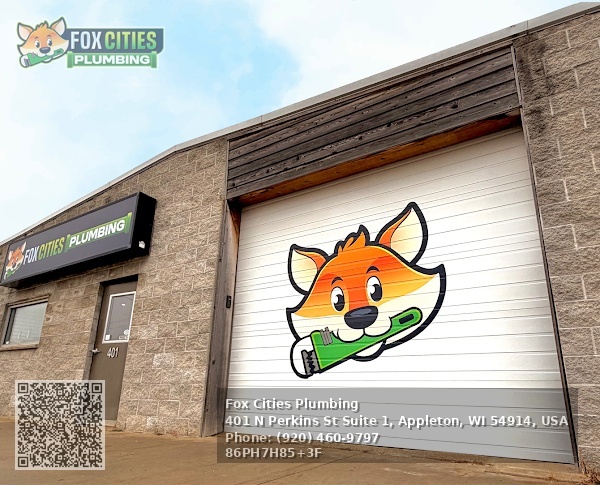
Fox Cities Plumbing is located at 401 N Perkins St Suite 1, Appleton, WI 54914, United States.How can I contact Fox Cities Plumbing?
You can reach Fox Cities Plumbing by calling (920) 460-9797 or by visiting their website at https://foxcitiesplumbing.com/.What are the business hours for Fox Cities Plumbing?
Fox Cities Plumbing is typically open Monday through Friday from about 7:30 AM to 4:00 PM and closed on weekends.Does Fox Cities Plumbing serve areas outside Appleton?
Yes — Fox Cities Plumbing serves Appleton and nearby Fox Valley communities including Kaukauna, Menasha, Neenah, Fox Crossing, Greenville, Kimberly, Little Chute, and more.--------------------------------------------------
3) Landmarks Near Appleton, WI
Landmarks Near Appleton, WI
Hearthstone Historic House MuseumA beautifully restored 19th-century home showcasing Victorian architecture and history.
Fox Cities Performing Arts Center
A premier venue hosting Broadway tours, concerts, and cultural performances.
Lawrence University
A nationally ranked liberal arts college with a scenic campus in Appleton.
Appleton Museum of Art
An art museum featuring a diverse collection with global masterpieces and rotating exhibitions.
Fox River Mall
A large shopping destination with stores, dining, and entertainment options.
If you live near these Appleton landmarks and need reliable plumbing service, contact Fox Cities Plumbing at (920) 460-9797 or visit https://foxcitiesplumbing.com/.
Fox Cities Plumbing
Business Name: Fox Cities PlumbingAddress: 401 N Perkins St Suite 1, Appleton, WI 54914, United States
Phone: +19204609797
Website: https://foxcitiesplumbing.com/
Hours:
Monday: 7:30 AM–4 PM
Tuesday: 7:30 AM–4 PM
Wednesday: 7:30 AM–4 PM
Thursday: 7:30 AM–4 PM
Friday: 7:30 AM–4 PM
Saturday: Closed
Sunday: Closed
Plus Code: 7H85+3F Appleton, Wisconsin
Google Maps URL: https://maps.app.goo.gl/bDtvBMeLq9C5B9zR7
Google Maps Embed: